
 Clique aqui para ler esse post em português
Moving to a new country is one of the most ‘intense’ and full of opportunities (and risks) transitions. To become an expat is the goal of many profissionals who see in this experience the opportunity of widening horizons, ‘supercharge’ their development and multicultural skills. I know about this subject well, as I am an expat myself and have been in this path for the last 10 years. In the page About Me, you will find more information about my career outside my ‘motherland’.
Since the first months of my life abroad I became intrigued about the multicultural dynamics in the workplace and started to observe and analyse the elements that supported (or blocked) the professional success of expats. My work as a Transition Partner is one of the outcomes of this study. My experience and observations enable me to support other expats in making sense of their new context, manage emotions and behaviours and ‘make the best’ of the experience. Besides, of course, increasing the chances of achieving success in the international arena.
To complement my observations and readings about the subject, I started a research with other expatriate (mainly Latin Americans) to register their experiences and the ‘lessons learned’. As sharing knowledge is fundamental, today I am going to share with you 5 tips of a Brazilian , Beatriz is her name, who lived a very enriching experience when she went through a professional transition, from Brazil to London six years ago. Today Beatriz is perfectly adapted and has a senior role in a multinational based in Asia.
Tip 1 – Dealing with the ‘cultural shock’ – let’s talk about it – Exchange ideas and openly talk about your experiences with people who may be living similar events can be of great help. All expats are aware of that.

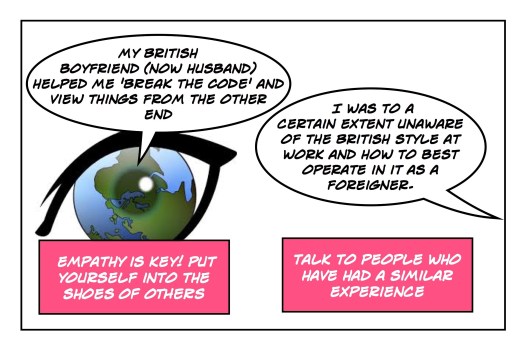
Tip 2 – Empathy and preparation – breaking the new code. Besides maintaining relationships with people from a cultural background similar to yours, it is important to make friends with people born in the new country. Among other things they may help you understand the perspective of ‘the other side’. Building empathy, know what I mean?
Tip 3 – Adjusting expectations and dealing with unexpected emotions – Beatriz tells us that in all her career, back in Brazil, her performance had always been assessed as above average. The feeling of not being ‘competent enough’ was a great surprise for her. It is important to be aware of this possibility and deal with these emotions openly.

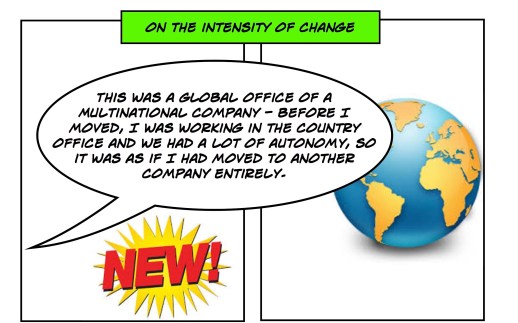
Tip 4 – About the intensity of the change – even if you don’t change companies, the organisational culture may be completely different from the one you were used to. It’s very important to understand the dynamics and position yourself appropriately in the new context.
Tip 5 – The adaptation has to happen on both sides – I think there are two lessons here: 1. You may have to adapt to a new management style. That’s a fact. 2. For me, the key message here is for the organisations that send executives to live & work abroad. The preparation of leaders/managers that will host expats is fundamental. The right levels of ‘stress’ and ‘support’ must be found to ensure that all parts (organisation, manager and expat) benefit and grow with the experience.

The experiences of the expats may be very different, depending on the organisation, country and the personal characteristics of the professional. Getting to know about and reflect upon experiences similar to ours is, almost always, a good investment of time and energy. I wish you a great week and do send me a note to know more about how a Transition Partner can help you (who is an expat) or your expat employees. I will be back next week!
 Luciana Biscaia